
Complete Guide to Building a Custom Home in Alamance County, NC: Timeline, Costs, and What to Expect
Building a custom home is one of the most significant investments you’ll make, and understanding the process from start to finish can help you feel confident as you embark on this exciting journey. If you’re considering building in Alamance County, North Carolina, you’re choosing an area with a rich sense of community, growing neighborhoods, and access to both urban amenities and natural beauty. This guide walks you through everything you need to know about building a custom home in the Burlington, Graham, and surrounding areas.
Why Choose Alamance County for Your Custom Home?
Alamance County offers a unique combination of affordability, accessibility, and community character. Located in the heart of the Piedmont Triad region, areas like Burlington, Graham, Mebane, and Elon provide homeowners with convenient access to Raleigh-Durham and Greensboro while maintaining a more relaxed, small-town atmosphere.
According to the U.S. Census Bureau, Alamance County has experienced steady population growth over the past decade, indicating strong community development and economic stability. The area’s strong school systems, proximity to higher education institutions like Elon University, and relatively lower cost of living compared to major metropolitan areas make it an attractive location for families and professionals alike.
Understanding the Custom Home Building Process
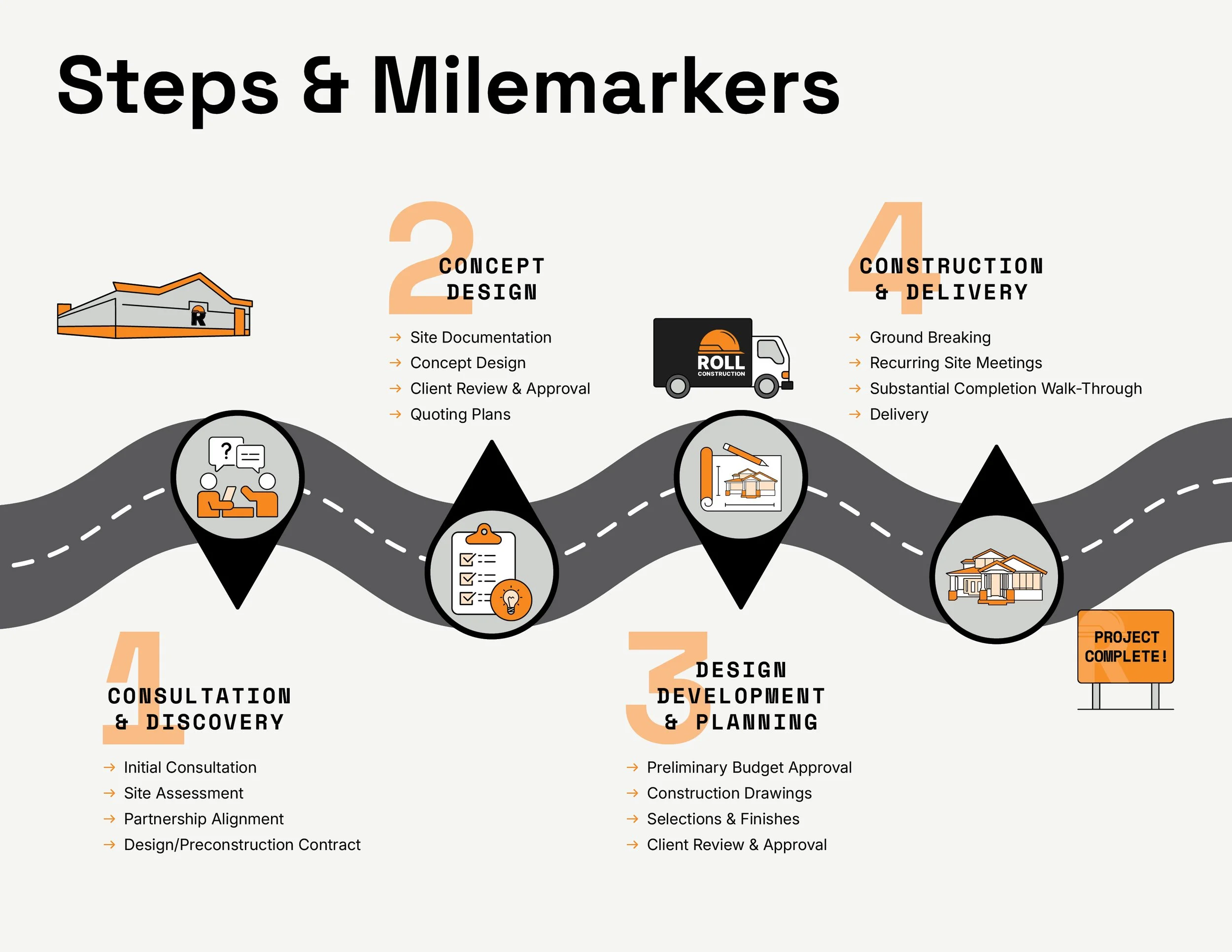
Roll Construction Project Roadmap
Building a custom home involves several distinct phases, each requiring careful planning and coordination.
Phase 1: Planning and Design (2-4 months)
The journey begins long before any ground is broken. During this phase, you’ll work closely with your builder to establish your vision, budget, and timeline. This includes:
Selecting Your Lot: Whether you already own land or need to purchase a building site, location will significantly impact your overall project. Factors like lot topography, soil conditions, utilities access, and zoning regulations all play a role in determining both feasibility and costs.
Preliminary Design Work: You’ll collaborate with your builder and potentially an architect to develop floor plans that match your lifestyle needs. According to the National Association of Home Builders (NAHB), the average new single-family home built in 2024 was approximately 2,200 square feet, though custom homes can vary significantly based on individual preferences and budget.
Establishing Your Budget: A realistic budget accounts for land costs, construction expenses, permits and fees, utility connections, landscaping, and a contingency fund for unexpected issues. The NAHB Construction Cost Survey indicates that site work, foundation, and framing typically account for about 40-45% of total construction costs.
Phase 2: Pre-Construction (1-2 months)
Once your design is finalized, several important steps occur before construction begins:
Permitting: In Alamance County, building permits are required for new construction and must comply with North Carolina State Building Code. The permitting process typically takes 2-4 weeks, depending on project complexity. Your builder should handle this process and ensure all plans meet local code requirements.
Site Preparation: This includes surveying, clearing, grading, and preparing utilities access. Soil testing may be required to determine the appropriate foundation type for your specific lot conditions.
Finalizing Contracts and Financing: Most lenders require detailed plans and specifications before approving construction loans. Working with a lender experienced in construction financing can streamline this process significantly.
Phase 3: Foundation and Framing (1-2 months)
The most visible progress happens during this phase:
Foundation Work: Depending on your home design and lot characteristics, your foundation may be a slab, crawl space, or full basement. North Carolina’s clay-heavy soils require proper engineering to prevent foundation issues down the road.
Framing: Once the foundation cures, framing begins. This is when your home truly starts to take shape. Wall frames, roof trusses, and structural elements are installed, making it easy to visualize room layouts and overall flow.
Phase 4: Systems Installation (1-2 months)
With the structure in place, the focus shifts to the systems that make your home functional:
Rough-In Work: Plumbing, electrical, and HVAC systems are installed before walls are closed up. This phase includes multiple inspections to ensure everything meets code requirements.
Exterior Finishes: While interior work progresses, the exterior is weatherproofed with siding, roofing, windows, and doors.
Phase 5: Interior Finishes and Final Details (2-3 months)
The final phase brings your home’s personality to life:
Drywall and Interior Finishes: Walls are closed, textured, and painted. Flooring, cabinetry, countertops, and fixtures are installed.
Final Systems: HVAC, electrical, and plumbing fixtures are completed and tested.
Final Inspections and Walkthrough: Before closing, multiple inspections ensure everything meets code and matches specifications. A thorough walkthrough with your builder identifies any punch-list items that need addressing.
Realistic Timeline Expectations
According to the U.S. Census Bureau’s Survey of Construction, the median time to build a single-family home in the South Atlantic region was approximately 8.1 months from start to completion in 2024. However, custom homes typically take longer than spec homes or production builds due to the additional design and decision-making involved.
A realistic timeline for a custom home in Alamance County from initial planning to move-in is generally 8-12 months. This accounts for:
Design and planning: 2-4 months
Permitting and pre-construction: 1-2 months
Active construction: 5-8 months
Final inspections and closing: 2-4 weeks
Weather can impact timelines, particularly during foundation and framing phases. North Carolina’s mild climate generally allows for year-round construction, though heavy rain periods in spring can cause delays.
Cost Considerations for Custom Homes in North Carolina
While specific pricing varies based on numerous factors, understanding the components of custom home costs helps with realistic budgeting.
Construction Costs: The NAHB reports that construction costs for custom homes can vary widely based on finishes, square footage, and complexity. Basic construction typically represents the largest portion of your budget, including labor, materials, and builder overhead.
Soft Costs: These include architectural and engineering fees, permits, inspections, insurance, and financing costs. Industry standards suggest budgeting approximately 10-15% of construction costs for these items.
Land and Site Work: If purchasing land, costs vary significantly by location within Alamance County. Site work expenses depend on lot conditions – a level, cleared lot with utilities at the street costs considerably less to develop than a wooded, sloped lot requiring extensive grading and utility extensions.
Contingency Fund: Experienced builders recommend maintaining a contingency reserve of 5-10% of your total budget for unexpected issues or design changes that arise during construction.
Choosing the Right Builder

Critical to your success. Look for builders who:
Provide clear, detailed contracts and communication
Maintain proper licensing and insurance
Offer references from recent clients
Demonstrate knowledge of local building codes and permit processes
Show a commitment to quality craftsmanship
According to the Better Business Bureau, checking a contractor’s complaint history, license status, and insurance coverage should be standard practice before entering into any construction agreement.
What Makes Custom Homes Worth the Investment
Custom homes offer advantages that extend beyond mere personalization:
Energy Efficiency: Building new allows you to incorporate current energy-efficient technologies and materials that may not be feasible in existing homes. The U.S. Department of Energy notes that homes built to current energy codes can be 20-30% more efficient than homes built just a decade ago.
Lower Maintenance: Everything in your home is new, typically with warranties covering major systems and components. This translates to fewer repairs and lower maintenance costs in the early years of homeownership.
Designed for Your Lifestyle: Unlike existing homes where you compromise on layout or features, custom homes are built around how you actually live. This can mean anything from a dedicated home office to a workshop, mudroom, or outdoor living space that perfectly suits your needs.
Local Advantages in Alamance County

Photo by Alamance County Visitors Bureau
Building in communities like Burlington, Graham, Mebane, or Elon offers specific benefits:
Established Infrastructure: Unlike more rural areas, these communities have developed infrastructure, utilities, and services that can reduce site work costs and complications.
Growing Communities: According to Alamance County planning documents, targeted growth areas offer opportunities to build in neighborhoods that are actively developing with new amenities and services.
Quality of Life: Access to parks, schools, healthcare, and cultural amenities while maintaining a more affordable cost of living compared to larger North Carolina metros creates an attractive balance for many families.
Making Your Custom Home Dream a Reality
Building a custom home in Alamance County is an achievable goal with proper planning, realistic expectations, and the right partner guiding you through the process. Understanding timelines, costs, and what to expect at each phase helps you make informed decisions and reduces stress throughout the journey.
The key to success lies in clear communication with your builder, flexibility when unexpected challenges arise, and maintaining focus on your long-term vision for your home and your family’s future.
Ready to explore building your custom home in Alamance County? Schedule a free 20-minute consultation with Roll Construction to discuss your vision, timeline, and next steps toward making your dream home a reality.
References:
U.S. Census Bureau. (2024). “Annual Characteristics of New Housing.” Retrieved from census.gov
National Association of Home Builders. (2024). “Construction Cost Survey.”
U.S. Census Bureau. (2024). “Survey of Construction: Median Months from Start to Completion.”
Better Business Bureau. “Choosing a Contractor: What to Check Before You Hire.”
