
Black Key Figures You Should Know This Black History Month
Black history is deeply embedded in the built environment. It lives in the campuses that educate future leaders, the civic buildings that anchor communities, and the homes that shape everyday life. Yet many of the Black architects, designers, and craftsmen who helped shape these spaces remain underrecognized.
This Black History Month, we are taking time to reflect on influential figures whose work, resilience, and vision left a lasting mark on architecture and construction. From North Carolina trailblazers to nationally celebrated pioneers, these stories remind us that progress in the industry has always been driven by talent, determination, and innovation
North Carolina Trailblazers
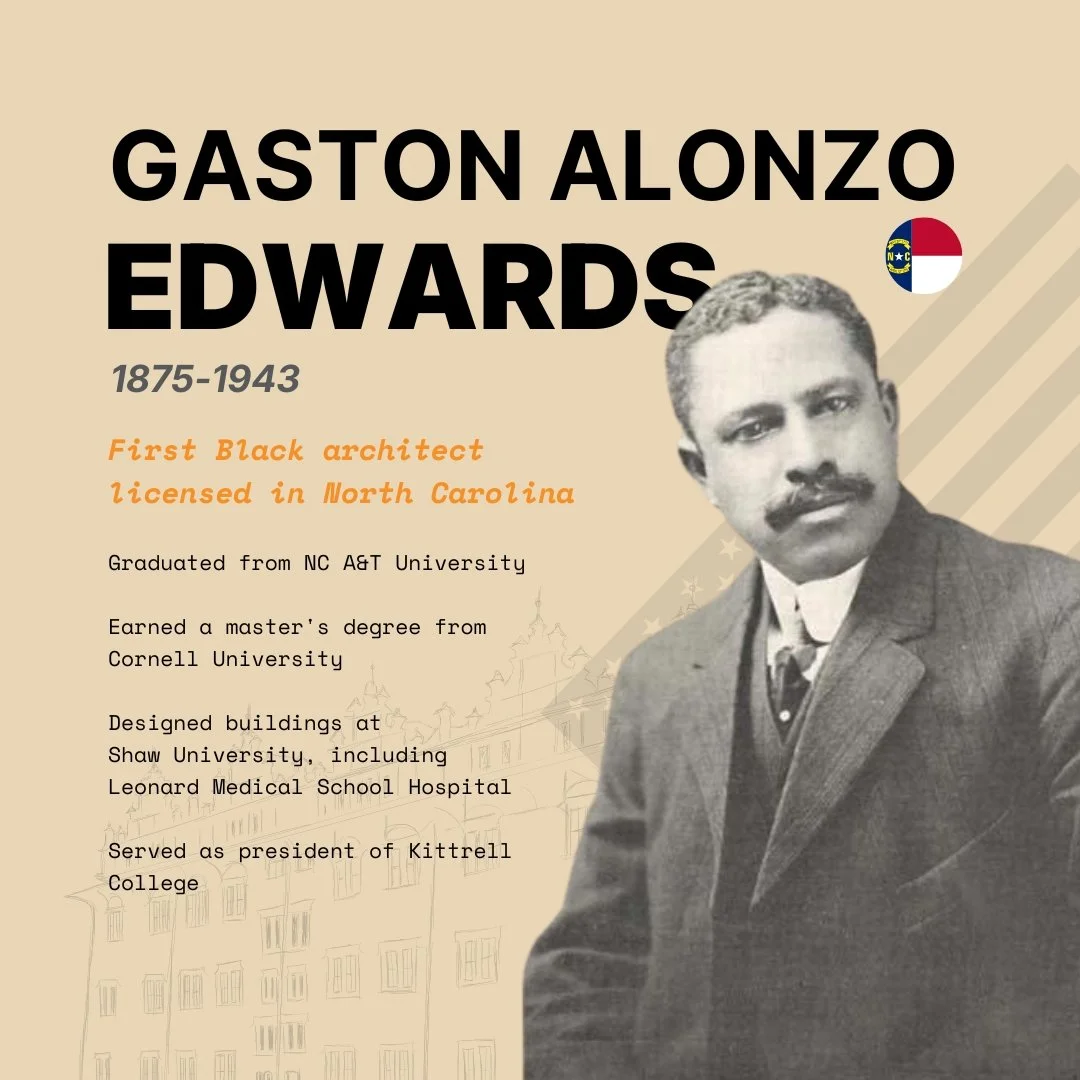
Gaston Alonzo Edwards
Gaston Alonzo Edwards holds the distinction of becoming the first licensed Black architect in North Carolina. For many years, he remained the only registered Black architect in the state, navigating a profession that offered few opportunities for African American designers at the time.
A graduate of NC A&T University and Cornell University, Edwards contributed significantly to educational and civic architecture. His work at Shaw University, including the Leonard Medical School Hospital, stands as a testament to both his technical expertise and professional integrity. Notably, Edwards identified and corrected a serious structural design flaw that could have compromised the building’s safety.
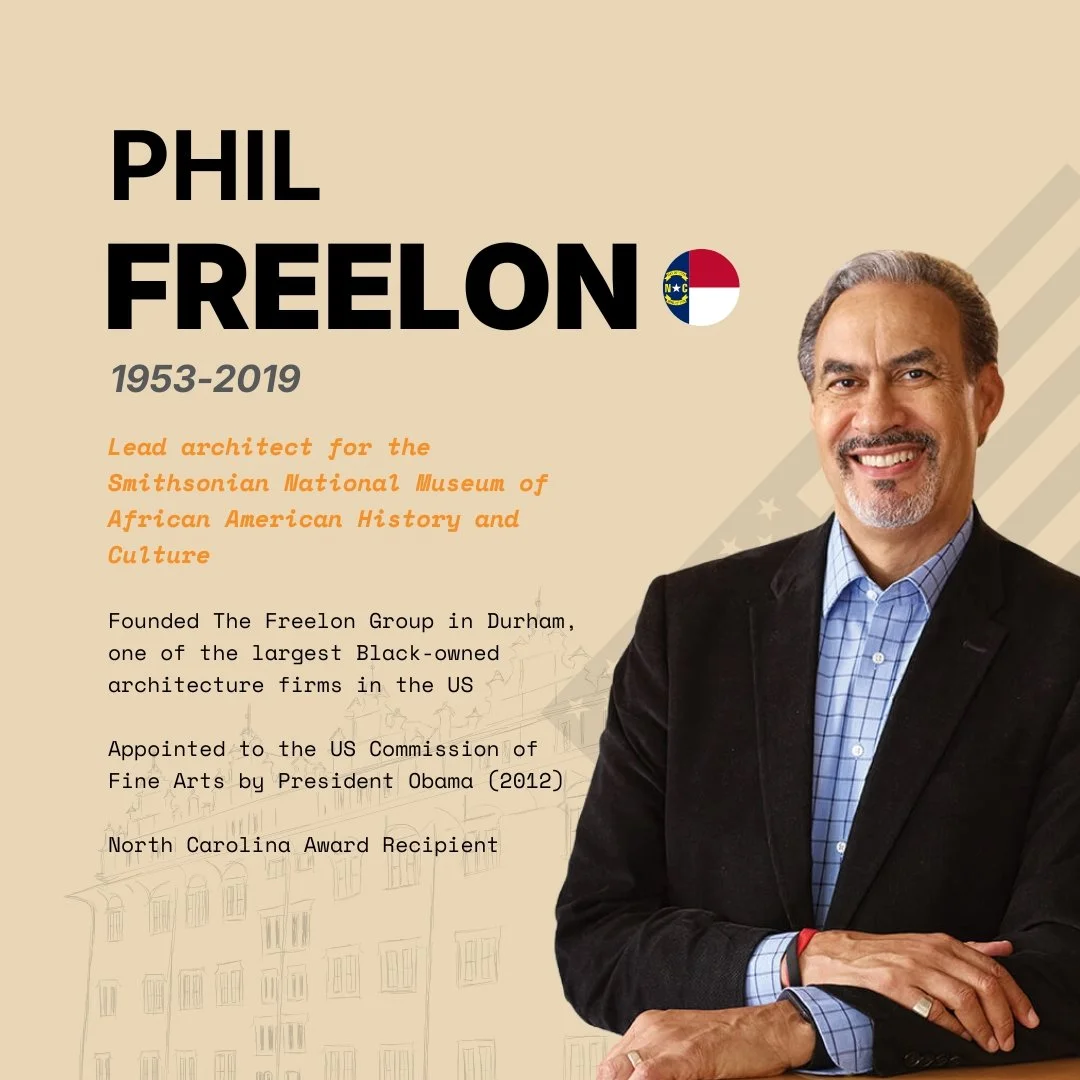
Phil Freelon
Phil Freelon’s impact on architecture extends from Durham, North Carolina, to one of the most visited cultural institutions in the world. As the lead architect of the Smithsonian National Museum of African American History and Culture, Freelon helped create a space dedicated to preserving and celebrating Black history.
Beyond this landmark project, Freelon founded The Freelon Group, which became one of the largest Black-owned architecture firms in the United States. Known for his purpose-driven philosophy, Freelon prioritized projects that enhanced communities and human experience, intentionally declining commissions that did not align with those values.
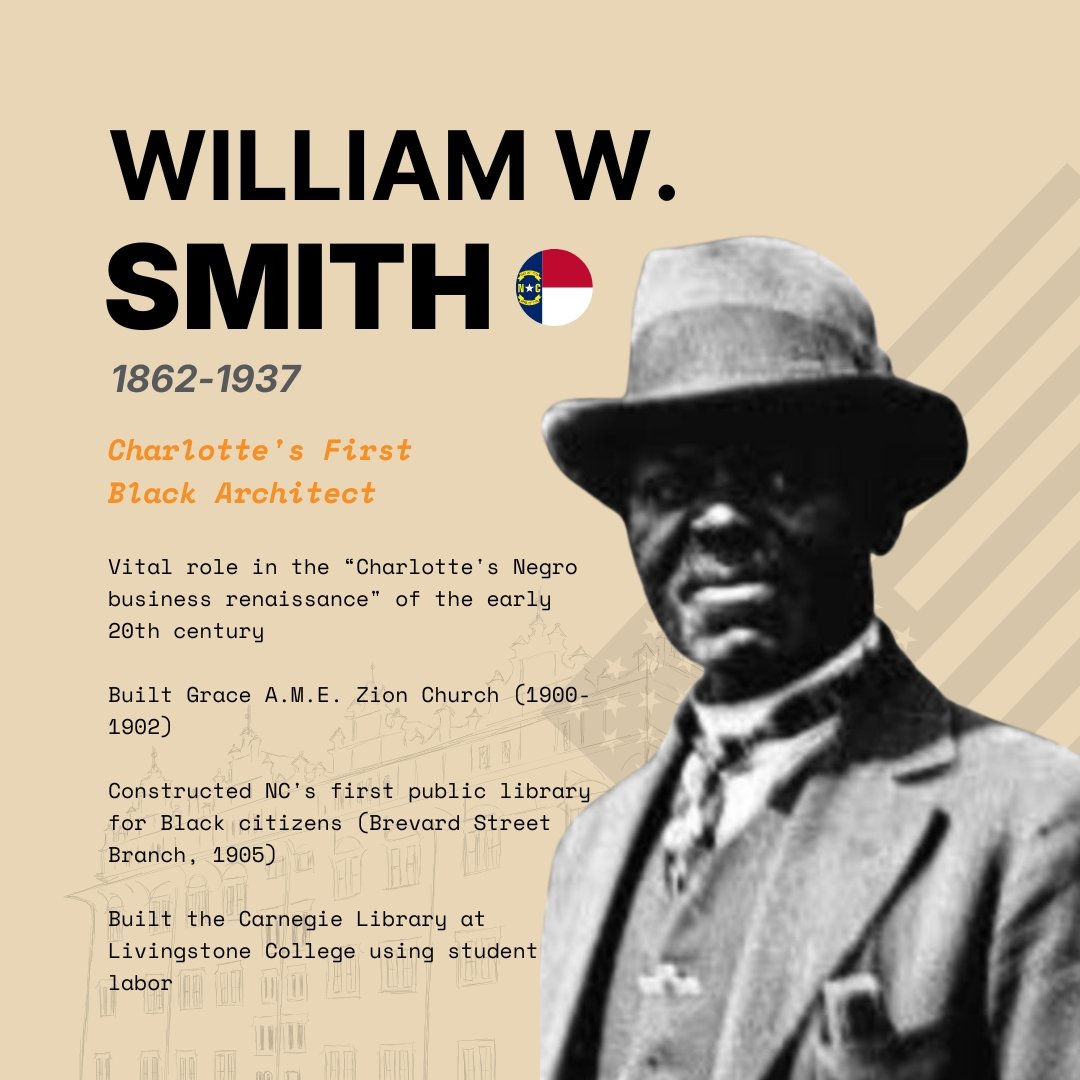
William W. Smith
William W. Smith, a master brickmason and contractor, played a pivotal role in Charlotte’s early 20th-century Black business renaissance. Often regarded as the city’s first Black architect, Smith combined construction expertise with design leadership. His work includes the AME Zion Publishing House, Grace AME Zion Church, and the Mecklenburg Investment Company Building. Renowned for his vivid polychrome brickwork, corbelling, and ornamental detailing, Smith’s buildings helped define Charlotte’s historic Black commercial corridor.
Though he identified professionally as a brickmason and contractor, his design influence was unmistakable. Today, surviving examples of his work stand as powerful reminders of craftsmanship, entrepreneurship, and community-building.
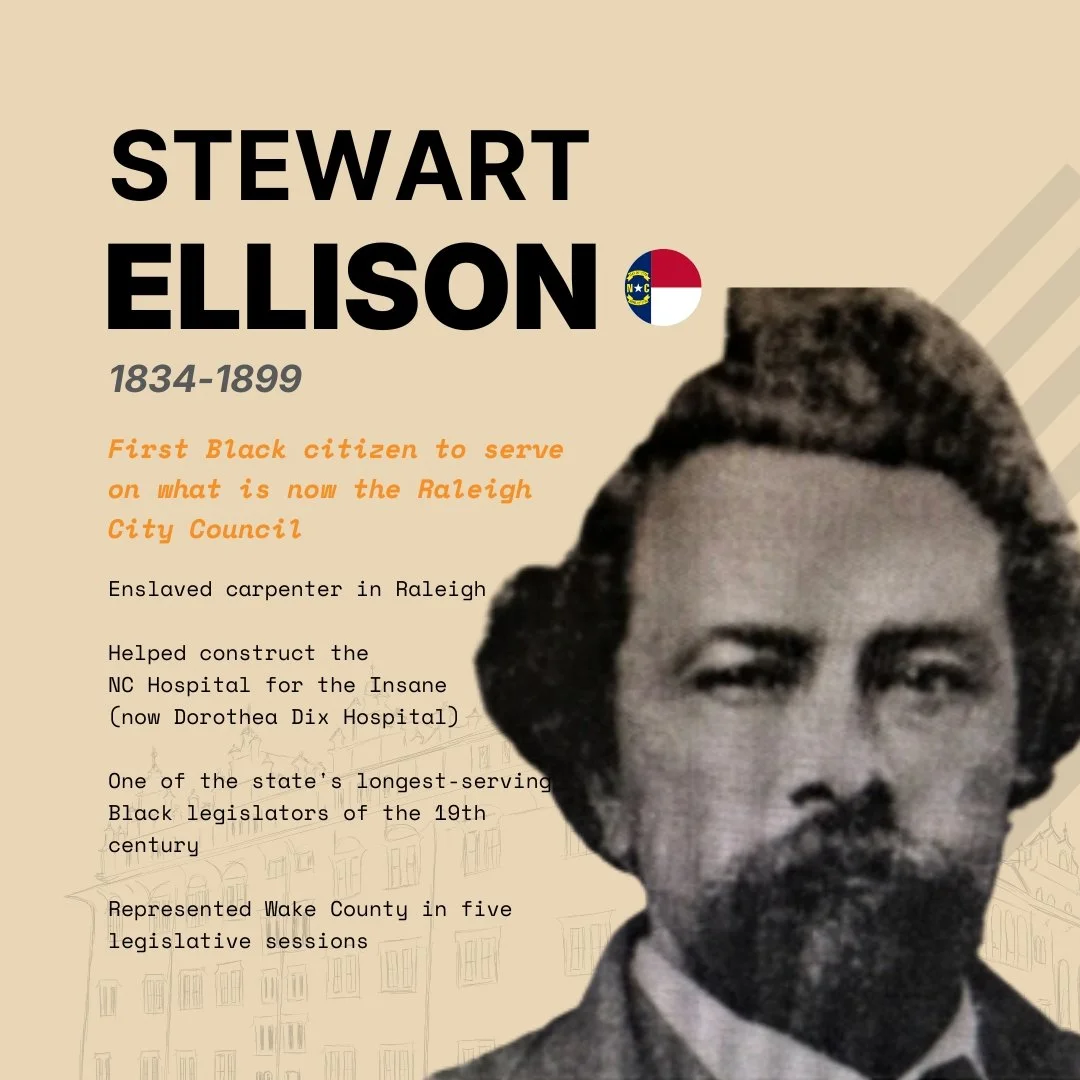
Stewart Ellison
Stewart Ellison began life enslaved in Beaufort County before becoming a skilled carpenter, joiner, and building contractor in Raleigh. As a young man he worked on major projects including early construction at the North Carolina Hospital for the Insane (now Dorothea Dix Hospital). After emancipation, Ellison established himself as a respected builder of homes, schools, and Freedmen’s Bureau buildings, known for the quality of his workmanship.
He soon moved into political leadership, becoming one of the first Black citizens elected as a Raleigh city commissioner and representing Wake County in the state legislature across multiple sessions during Reconstruction. His life bridges craftsmanship and civic service.
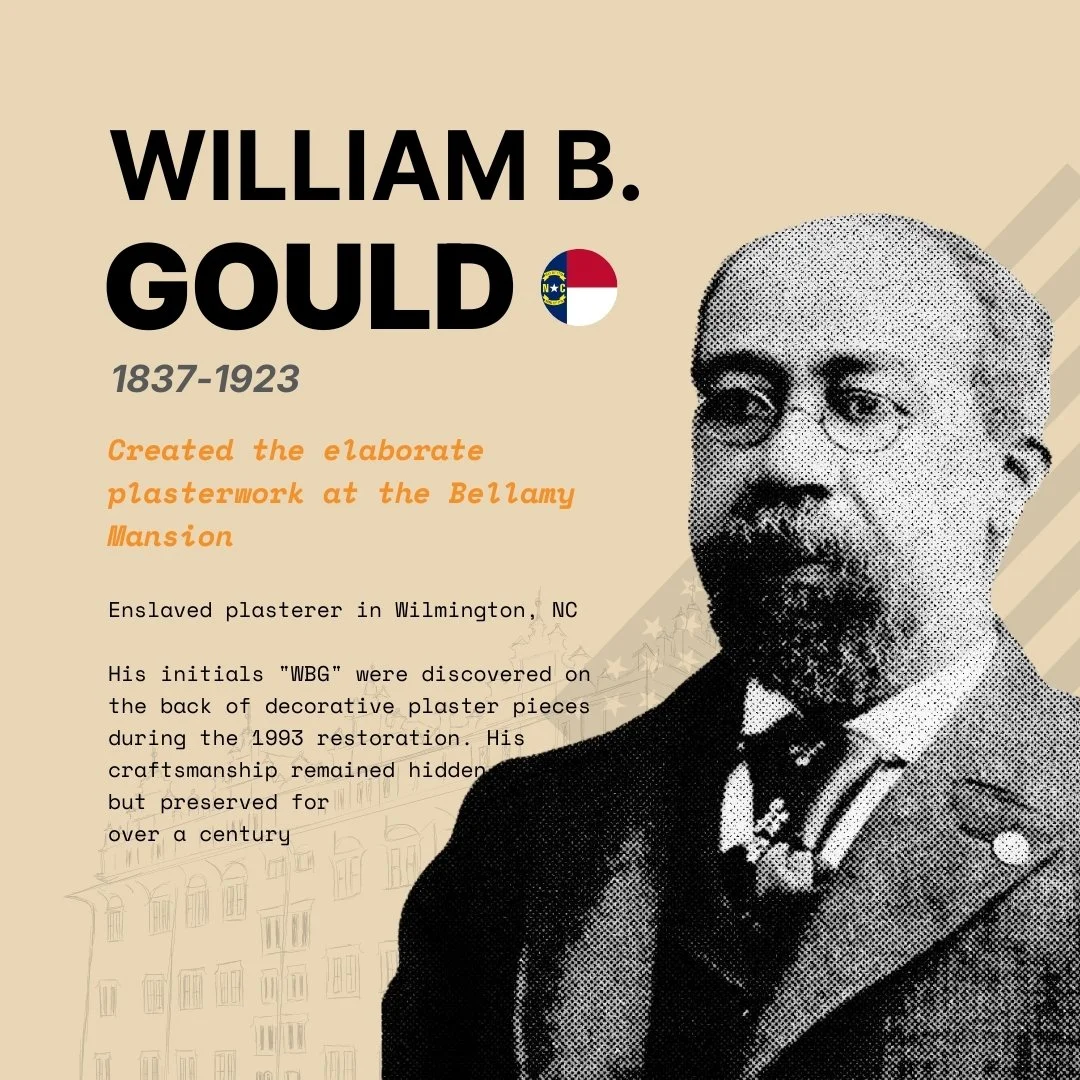
William B. Gould
William B. Gould I was an enslaved plasterer in Wilmington, North Carolina, whose craftsmanship survived long after his name was nearly lost to history. His only definitively identified work is the ornate plaster detailing at the Bellamy Mansion, where his hidden initials, “WBG,” were discovered during restoration more than a century later. Gould escaped slavery by sea in 1862 and joined the Union Navy, later building a life as a tradesman in Massachusetts.
Skilled, literate, and determined despite laws forbidding his education, Gould’s story reveals both the extraordinary talent of enslaved artisans and the long-overlooked contributions of Black craftsmen to Southern architecture.
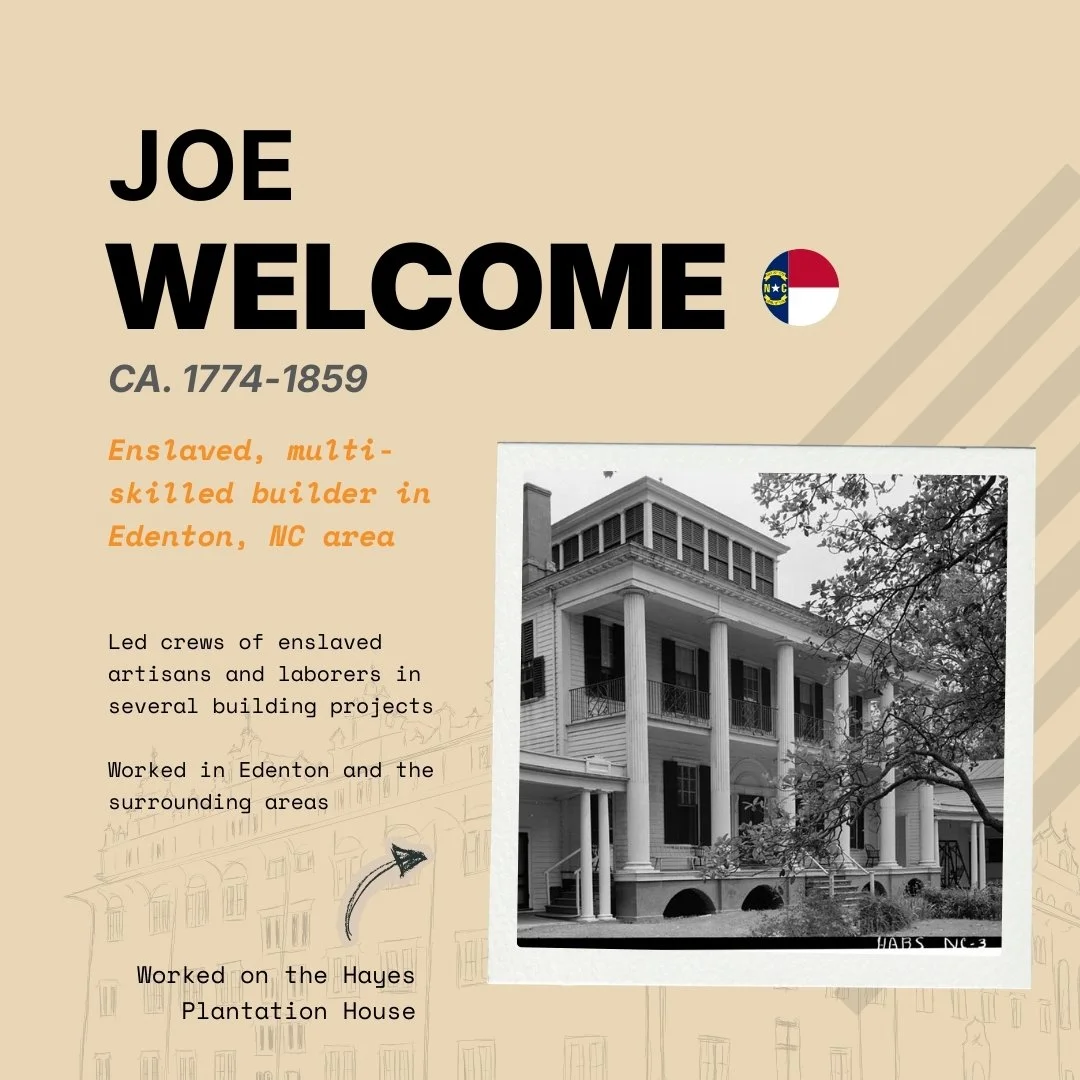
Joe Welcome
Joe Welcome was a multi-skilled enslaved artisan in Edenton who worked as a bricklayer, stonemason, and plasterer on important building projects throughout northeastern North Carolina. Hired out by his owner, Welcome performed complex construction work from laying stone foundations to interior plastering on structures such as the Edenton Academy and St. Paul’s Episcopal Church, often with remarkable autonomy for an enslaved person.
His documented involvement in significant projects demonstrates the deep yet often uncredited role that Black craftsmen played in building the early architectural fabric of the region.
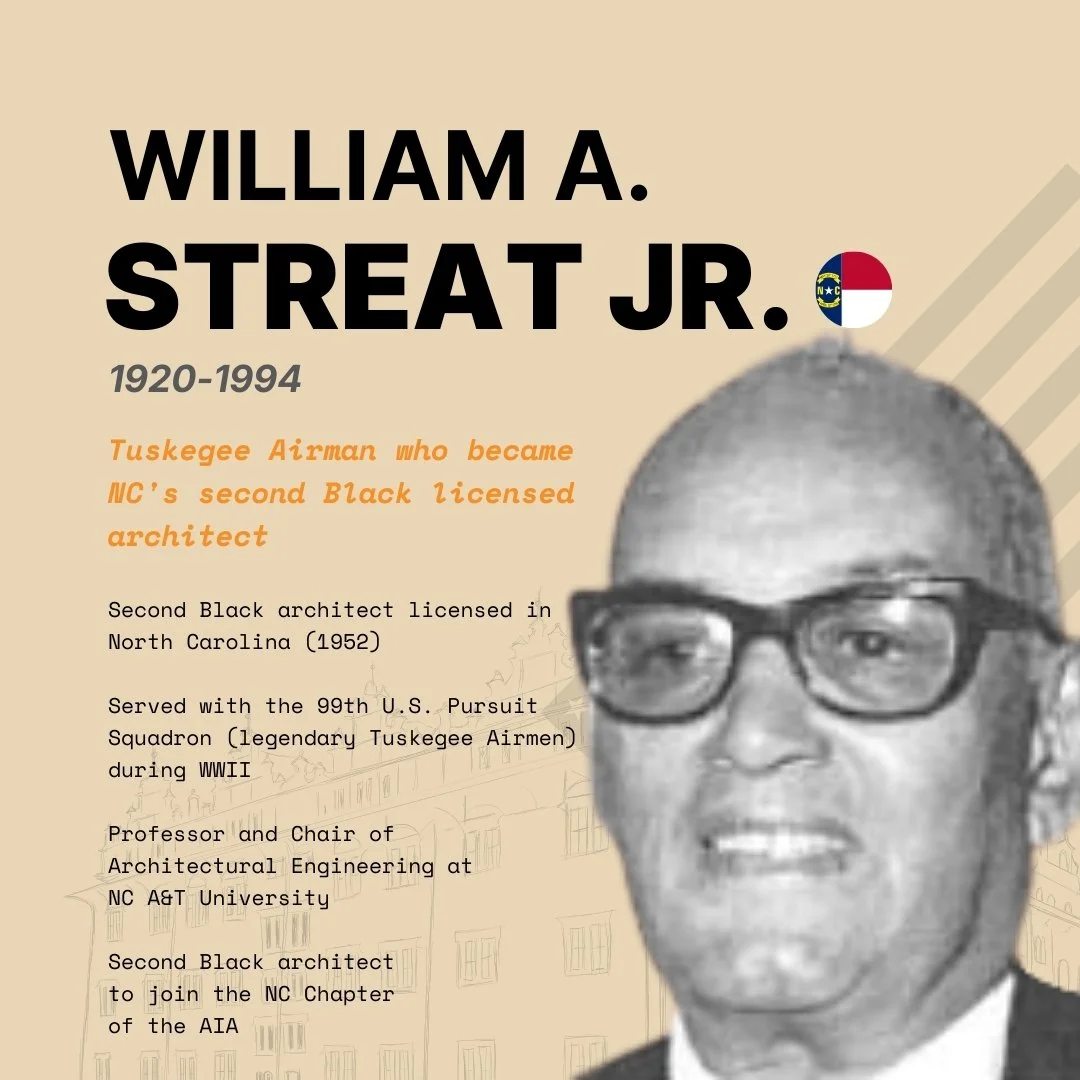
William A. Streat Jr.
William Streat Jr. was a Tuskegee Airman, educator, and one of North Carolina’s architectural pioneers. In 1952, he became the second African American licensed architect in North Carolina, helping break long-standing racial barriers in the profession. Streat earned advanced degrees in architecture, building construction, and architectural engineering, including graduate study at MIT.
As Professor and Chair of the Architectural Engineering Department at NC A&T State University, he led the program for 36 years, expanding enrollment, strengthening academic standards, and shaping generations of architects and engineers. His career reflects leadership, technical excellence, and a lasting contribution to North Carolina’s built environment.
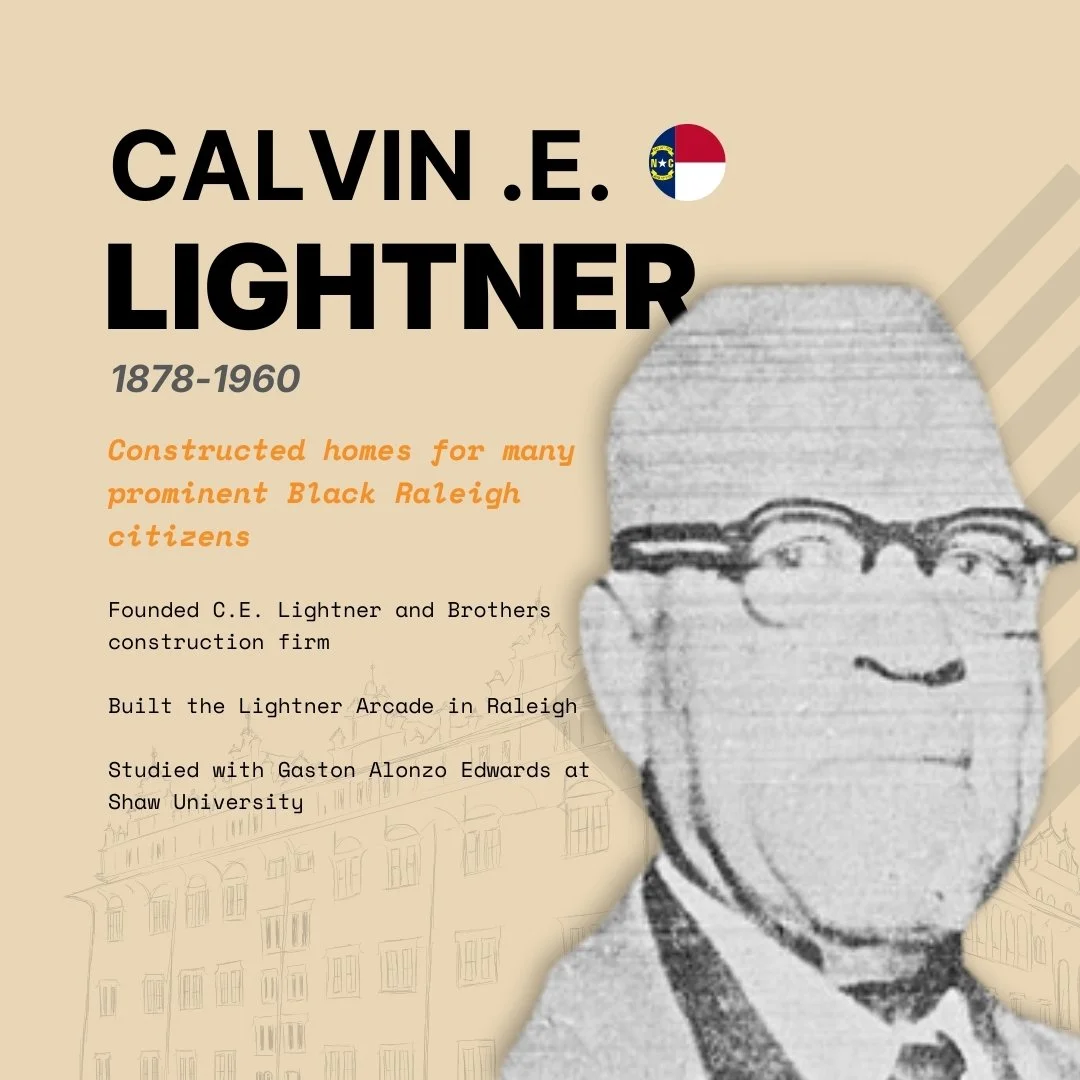
Calvin E. Lightner
Calvin Esau Lightner was a prolific architect, builder, and civic leader whose work helped define early 20th-century Black commercial and residential architecture in Raleigh and beyond. After studying architectural design at Shaw University and further coursework at Hampton Institute, Lightner and his brother founded C.E. Lightner & Brothers, designing and constructing homes for the Black middle class as well as commercial buildings.
His best-known works include the Lightner Arcade and Hotel and the Davie Street Presbyterian Church, and his firm contributed to East Hargett Street’s rise as Raleigh’s historic “Black Main Street.” Lightner’s career reflects entrepreneurial spirit and community development during a segregated era
National & Industry-Wide Pioneers
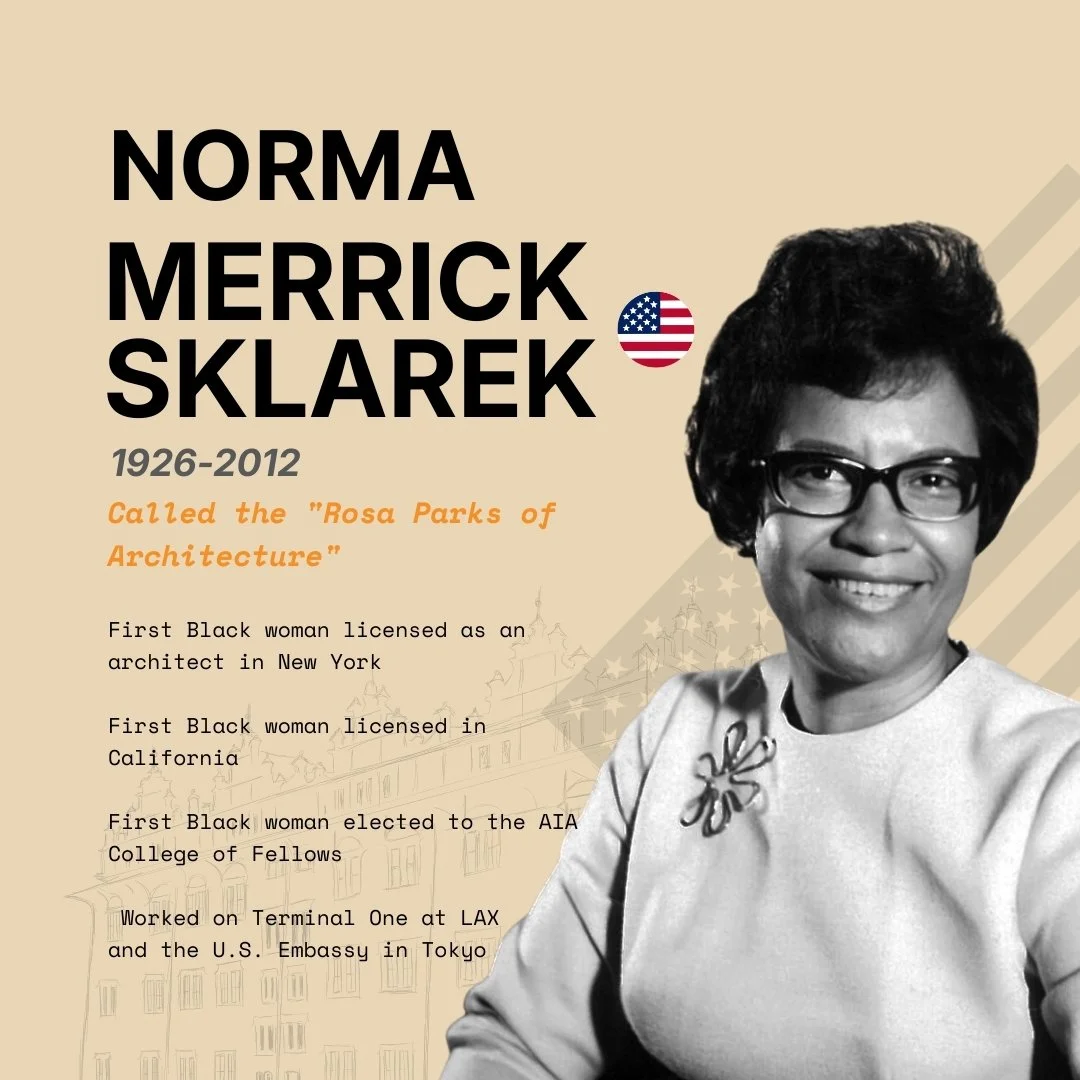
Norma Merrick Sklarek
Norma Merrick Sklarek was a groundbreaking architect whose career redefined what was possible for women and African Americans in architecture. Often called the “Rosa Parks of Architecture,” she became the first licensed Black woman architect in New York (1954) and later the first licensed Black woman architect in California (1962).
Despite facing both racial and gender discrimination, Sklarek rose to leadership roles at major firms, including Gruen Associates and Welton Becket Associates, where she oversaw complex, large-scale projects such as Terminal One at LAX and the U.S. Embassy in Tokyo. Known for her technical expertise and project management excellence, Sklarek paved the way for generations of minority and women architects.
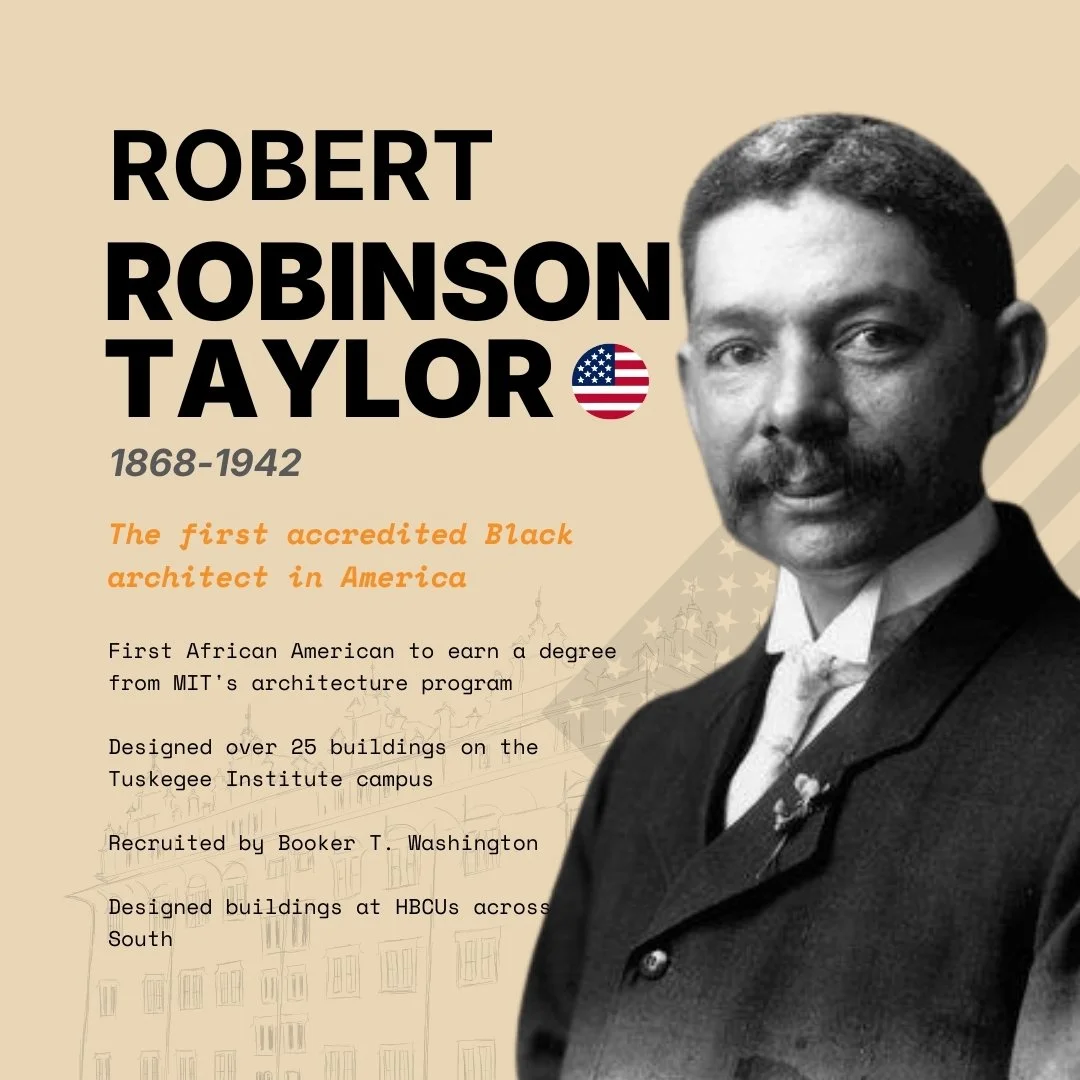
Robert Robinson Taylor
Born in Wilmington, North Carolina, Robert Robinson Taylor became the first African American graduate of MIT’s architecture program in 1892. Soon after, he was recruited by Booker T. Washington to help design and build Tuskegee Institute. Taylor served as the school’s architect, planner, and construction supervisor, designing many of the campus’s earliest buildings and shaping its layout in harmony with the natural landscape.
Beyond architecture, he played a key leadership role in Tuskegee’s industrial and mechanical programs, eventually becoming the vice president of the institution. Taylor’s career combined design, engineering, and education, leaving a lasting impact on historically Black colleges and the broader development of Black professional architecture.
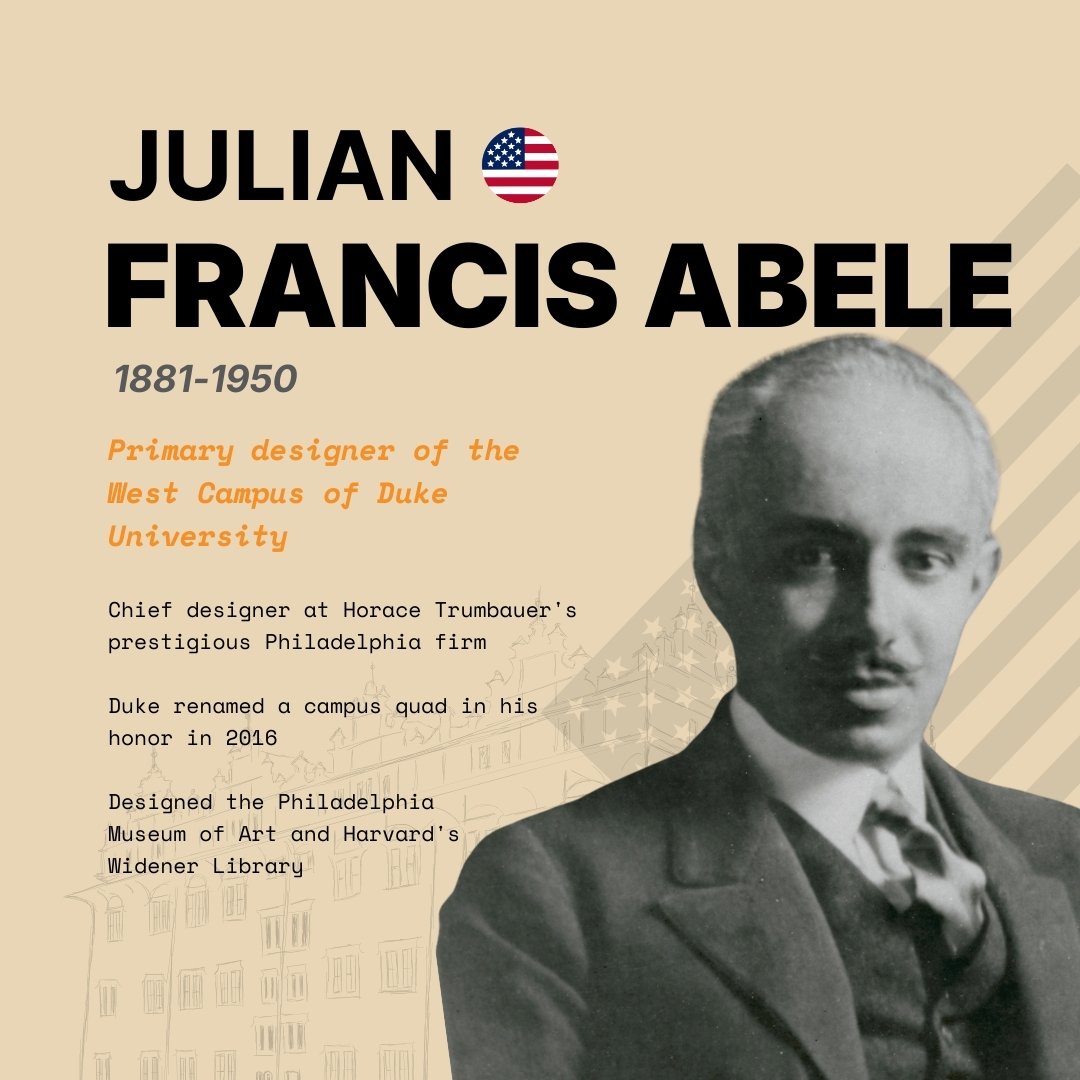
Julian Francis Abele
Julian Francis Abele was one of America’s most influential yet historically undercredited architectural designers. Abele became the first Black graduate of the University of Pennsylvania’s architecture program in 1902 and went on to serve as chief designer for Horace Trumbauer’s prestigious firm. His work helped shape landmark buildings, including the Philadelphia Museum of Art, Harvard’s Widener Library, and much of Duke University’s iconic Gothic campus.
Renowned for his mastery of Beaux Arts principles and exceptional artistic versatility, Abele excelled in both exterior design and interior detailing. Despite his extraordinary contributions, racial prejudice limited public recognition of his role during his lifetime, a legacy later honored posthumously.
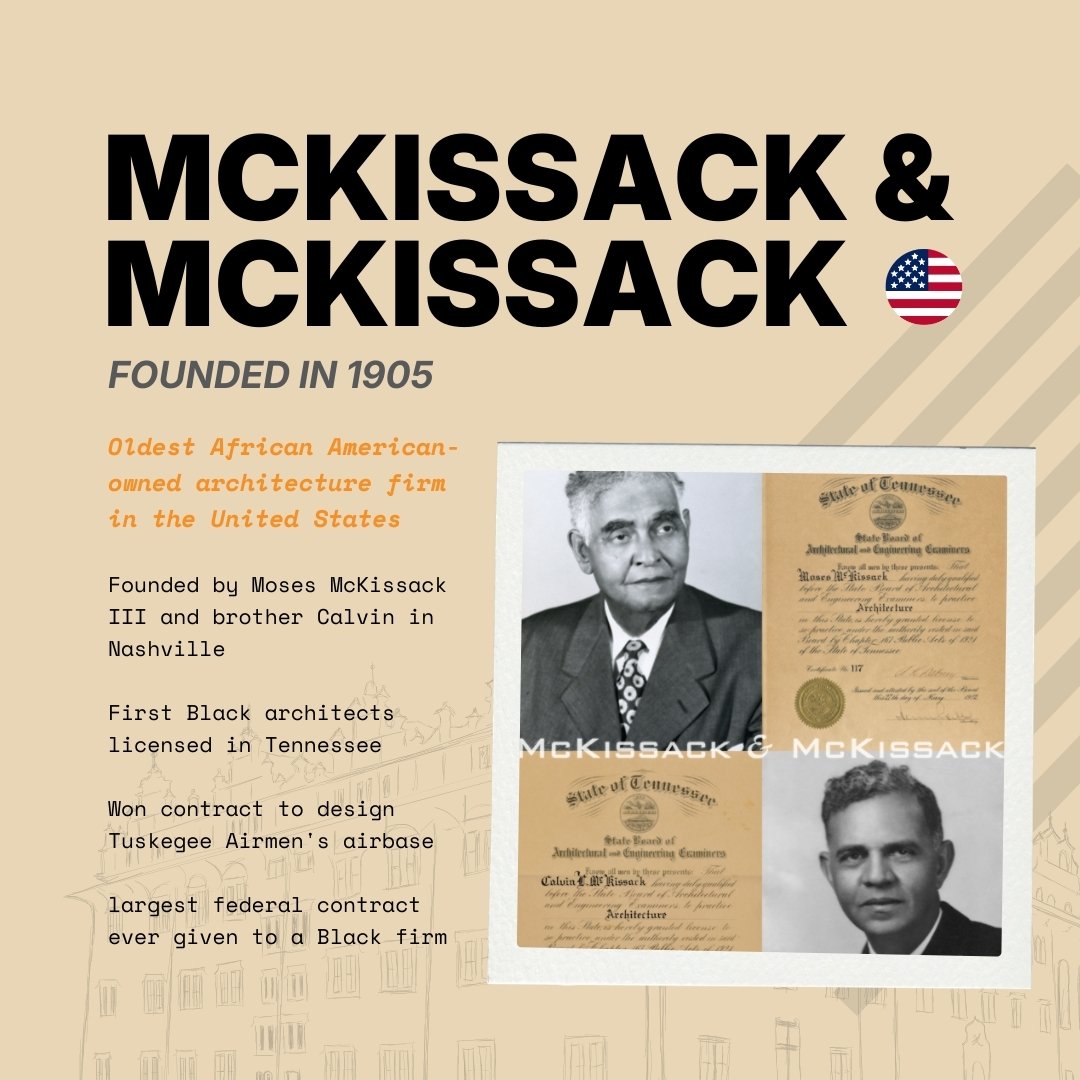
McKissack & McKissack
Founded in 1905, McKissack & McKissack stands as the oldest Black-owned architecture firm in the United States. The firm’s multi-generational contributions include major civic and cultural landmarks, reflecting a legacy of excellence and endurance.
Its roots go back to before the Civil War, when a slave named Moses McKissack learned the building trade from his overseer. It was his grandson, Moses III, who launched the first McKissack & McKissack in Nashville, Tennessee. McKissack & McKissack was founded by Deryl McKissack in 1990. When Ms. McKissack established her company, she was the fifth generation of her family to carry on the building tradition.
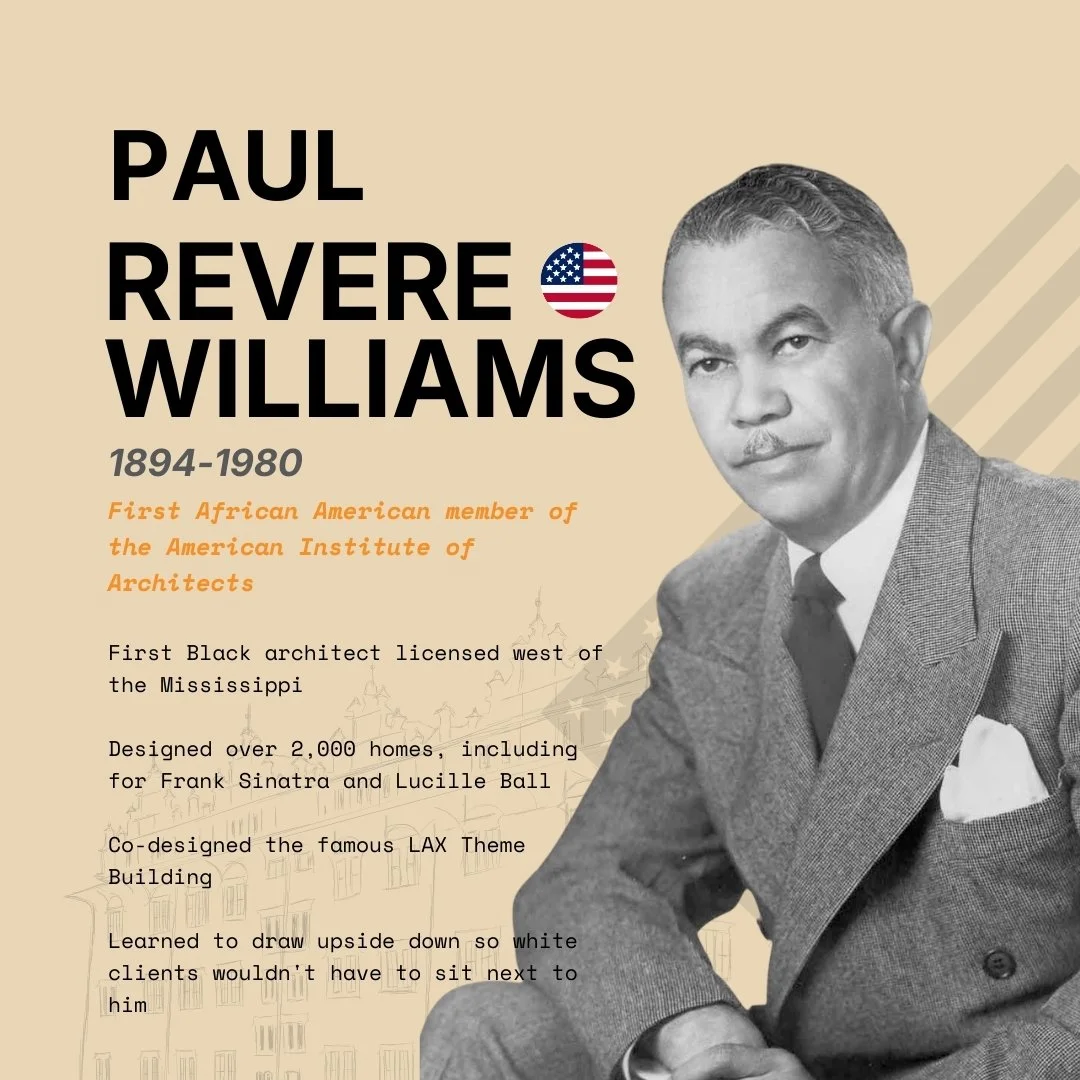
Paul Revere Williams
Paul Revere Williams was one of the most prolific and influential architects in American history. Over a career spanning nearly six decades, he designed more than 3,000 buildings, mastering styles ranging from Spanish Colonial Revival to Modernism. Williams broke major racial barriers, becoming the first African American member of the AIA (1923) and later its first Black Fellow (1957). Based in Los Angeles, he designed luxury homes for Hollywood icons while also contributing to public housing, civic buildings, and commercial landmarks.
Known for his elegance, precision, and adaptability, Williams famously learned to draw upside down so clients could comfortably view his sketches across the table. His legacy continues to shape American architecture.
Reflecting on Legacy
The built environment carries stories beyond materials and methods. It reflects the individuals whose ideas, labor, and perseverance shaped the spaces we inhabit today.
Recognizing these pioneers is not only about honoring history. It is about understanding the foundation of the industry itself and acknowledging the voices and talents that continue to shape its future.
Sources & References
NC Architects & Builders Database
Preservation North Carolina
Museum of the Albemarle
Smithsonian NMAAHC
NCModernist
Architizer
ICC Building Safety Journal
Urban Land Magazine
Washington Post
Wikipedia
